Soccer Tips and Tricks to Become a Better Player
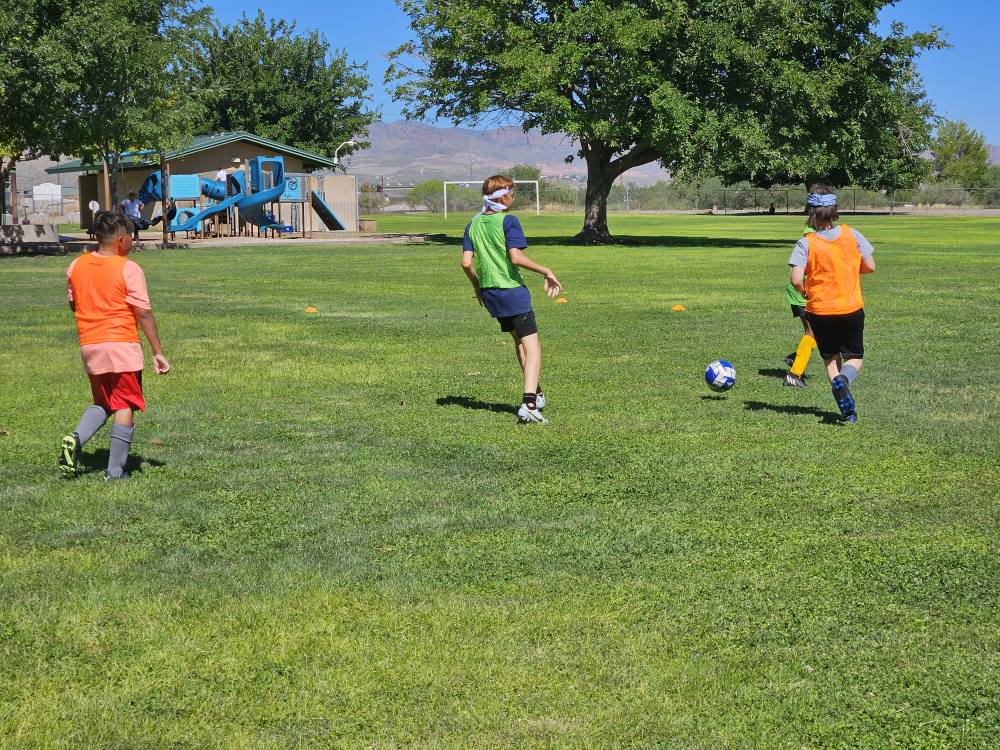 NOTE: Soccer is a simple game but the skills and knowledge required to be a top-tier player are complex. These tips will be extremely helpful, but are not meant to be 'everything' you need to know, nor are these meant to be answers to every situation - that would require a book! So these are just meant to be great examples you can follow in certain situations. Plus, that's where our soccer training comes in!
As a coach I see a lot kids play soccer and I see really good play on the field and really bad play. Here are the top things you can do to get better as a player:
- Whenever you are playing, always take your play seriously. This is both at practices and at games. You are going to make mistakes so don't be afraid to make them! However you must figure out how to learn from them as well.
- Most mistakes in the learning process come from not focusing, not caring (at the time), poor technique, or playing too fast before you have the technique down. Practice often and practice with both feet - the only way you get better is to practice and again, not be afraid to make mistakes. However, practice does NOT make perfect. Practice makes PERMANENT. You must practice good technique to actually get better.
- A lot of kids watch higher level play and get the idea that fancy "banger" shots and tricks win games. The truth is, the basics win games. Don't worry about being fancy - - get REALLY good at the basics FIRST! When you're comfortable and can easily perform basic techniques, then you can get REALLY good at one or two 'tricks' that you love to do that can 'juke out' defending players. One more thing: a toe poke shot at a goal when you are right there that SCORES is WAY better than that "banger" that flies over the goal!!
- Soccer is a team sport - have a positive attitude, be a team player by encouraging your teammates and not cutting them down. Healthy competition is good but making teammates feel bad about themselves will not help them get better.
- Have Passion and Heart for the game and have Confidence, Commitment, Conviction, and Composure for yourself. Discover what these terms mean and use them. Also - there's a lot of players and coaches that are bad at sportsmanship - they are bad losers and can be even worse at winning. Don't be that team - always be a good sport. You will be happier with yourself and you will sleep better at night knowing you did the best you could and you were a good sport about it as well.
- Speaking of being a team sport, you and your teammates must learn good communication techniques. Communication does not have to be verbal - a lot of soccer communication is hand signals (when you and your teammates see them!). Great communication is a HUGE success factor in soccer so start getting in the habit of using your words and hand signals when you want give or get the ball or help yourself and your teammates attack AND defend better!
When coaching soccer I tell players there are 3 resources that are available for us to use. These resources are finite - in other words there's a limited supply. However, being aware of them and using them properly allows you as a player to become more aware of the game itself. Therefore, you'll become a better player by understanding them and learning how to use them to your advantage:
- Space - the space on the field is limited. You must be aware of the space and where it's occupied and with who and what, and where it's empty. When your team has possession of the ball, you want to create space by spreading out both up and down the field and across the field, but you also want to stay connected (not be so far away you can't help and not hiding behind an opponent). When you personally have the ball, you want to send to some open space near you and not to an opponent when you don't have a good pass available to a teammate or a shot.
When defending, you want to deny space by marking up on opponents off the ball, and you especially don't want them to get to the middle of the field (I am talking about as you look across the field, not down the field). Giving an opponent the middle is like giving them a free shot on goal, so try to corral the opponent with the ball toward the outside (the wings). - Time - can you think of how time is important? When you have the ball, if you keep it too long, what happens? Right - you lose it. But you may not have a teammate available to help, so you have to give yourself more time to make a play. Also, the faster you play when you have the ball, the less time you take. This is an extremely important concept especially when you have an opponent that is pressing you hard. Also, (generally speaking) take shots on goal when you can. You won't have time to get that perfect shot with your strong foot, so take the shot you've got. If you shank it, practice that shot (and others) in your next practice!
- Energy - when you play soccer you expend energy. What happens when you start playing a new game and you run really hard for the first 5 or 10 minutes? Do you run yourself out? Energy is a limited resource and there are things you can do to help conserve it. Here are some things to consider:
* Do everything you can to get in better shape. Go out and practice and run with the ball. Work on Foundation techniques, and more.
* Let the ball do a lot of the work by passing instead of dribbling a lot unless you have open space near you that you can get to easily.
* Be sure you're breathing properly when you're working hard - a lot of the tired feeling comes from a lack of oxygen. Breathe deeply when you're running so you get plenty of oxygen into your system!
* When you pass the ball, pass accurately. Poor passes result in wasted energy because then you or a teammate has to chase, plus it opens up the opportunity for an opponent to regain possession.
* It's a fact that if you don't stay active, you will lose your capacity to play. Low or no activity for two weeks will make you lose 90% of your breath capacity to play soccer!
I half-jokingly call these "Cardinal Sins" but really these are things that you should try to NOT do in soccer because doing them can make your play WAY worse:
- Don't turn your back on the ball - always face the ball or if you are running full speed away from the ball, look back several times during the run so you always know where the ball is located and who has it
- Do not let the ball get behind you when handling the ball (unless you meant to)
- Generally speaking, don't trap the ball with the bottom of your foot - and there are several reasons for this. First, the ball under your foot doesn't set up a good next touch or pass. Second, if you lift your foot up too high the ball will get under your foot and then behind you (which is usually a bad thing). Third, if you're under pressure you can't make a good touch to space. There may be times where this type of trap can work - but using it often is a bad habit
- Don't miss the ball when you try to kick it. There are three reasons this happens - either you weren't looking at the ball when you tried to touch it, you over-extended your leg trying to get to it, or your timing or aim was off. So consider those things if that happened to you and fix it for the future
- Do not just ball watch when you are defending an opponent off the ball (when that player doesn't have the ball but one of their teammates does have it). You have to know where the ball is of course, but it's just as important for you to know where the opponent you're defending is (and watching their body language so you know what they're about to do). That's the only way you can defend them properly
- Immediately press an opponent when they have the ball to try to lure them into making a mistake, but do NOT stab at the ball or over-commit when defending. The opponent with the ball can just dribble around you if you do that - instead, slowly step backward at an angle to the opponent to give them space a little at a time. This will make them think they can get around you, but then you can press again when you get help (QUICKLY CALL FOR HELP!).
- When you have the ball, do not try to go through 2 or 3 defenders in a row (or if they're pretty much together side by side as another example) UNLESS there's space between them that you can dribble through (this is known as a "seam"). Chances are high you will lose possession if you can't dribble through the seam. Instead, a teammate should be ready for a drop pass behind you, or you should know another location when either a teammate can get to or you can send to space and follow, or you can send a through ball, as examples. If there's a bunch of opponents in front of you, where are they probably not at that time? Behind you, right?
- Get to know which players you can beat and which players can beat you. If you have the ball and you're up against a faster player, don't try to outrun them because you won't be able to - they are faster than you, right?? However you can buy some time and space either by performing a good trick to get them off-balance, quickly stopping and starting the dribble (ball on opposite foot from opponent), or 1-2 with a teammate (as good examples).
Here are several ideas to incorporate (use) in your game play that can help your team win the soccer game:
- Consider that when you receive the ball, whether from a teammate, a 50-50 ball (where either team can get it, first to the ball wins it), or tackling it from an opponent, your job is to KEEP possession of the ball for your team. This means not losing it to an opponent!
- Every touch is important but the first touch is the most important. If you touch the ball to an opponent they will gladly take it from you. Don't try to do too much with a fast ball coming at you. Take a good control touch if needed. If you have a one-touch shot, take it. Otherwise, you can touch the ball either to where you can get it immediately, to space away from an opponent (and follow to control) or send with appropriate aim and pace to a teammate.
- A really great technique to use when controlling the ball is shielding. This is when you put your back to an opponent and the ball is in front of you, so your body becomes the shield for the ball. Just turning your body on the ball will shield the ball many times, AND when done right it allows you to see more of the open field AND open teammates!
- Play the ball on the ground whenever possible. Sure, air balls look cool, but in reality they are 50-50 balls most of the time. Remember that you want to KEEP possession for your team, and a 50-50 is not possessing the ball.
- After the first touch, each additional touch is most important. Remember that the longer you keep the ball, the more opponents that will be coming to try and take it from you. This means there are less opponents to defend your teammates - so pass the ball accurately to an open teammate (send through balls where possible)
- Whenever a teammate has the ball and you are close enough to them, always become a good option for your teammate to play to. That means not hiding behind opponents (or even a teammate) - and communicate that you're open and available. If your teammate with the ball is facing away from you, they won't see you so you must use a loud voice - this is especially effective for drop passes (a drop pass is a pass where you're typically between 5-15 yards away and somewhat behind your teammate as they're looking at the goal you're trying to score in).
- Through balls work very well. A through ball is a ball that you send through the space between two or more opponents, usually in the general direction of the goal you want to score in. Through balls could also be somewhat going across the field, as well, such as when you "switch" fields.
These work only when a teammate is available to receive them. The ball then beats multiple opponents at the same time - just be sure that your through ball goes either directly to your teammate or to space to where your teammate can get to it before an opponent does (or before it goes out of play). NOTE: You can also send a through ball to yourself, but this is tricky to do and requires practice (and speed)! - Good, highly-practiced technique wins games - bad or poorly practiced technique loses games (that statement is true only when you're trying your best - if you're not trying your best, you're not trying at all). I see this time and time again, so do yourself and your team a favor. Always use good, highly-practiced technique, whether it's controlling the ball, dribbling, passing, or shooting - be aware of what you're doing and if something went wrong you probably didn't use good technique or you didn't practice the technique enough to use it confortably under pressure. Really most of the time it's as simple as that.
- So - what's good technique? Well - here's a shortlist:
- Be on your toes with your legs spread apart almost shoulder width, and bend your knees slightly every time you're about to be involved in the play. I call it light and springy. You can move to the ball MUCH faster, in any direction, when you're light and springy than you can when you're flat-footed and straight-legged! This also gives you a lower center of gravity which makes you more stable on your feet and you won't get knocked over as easily when you're in this position.
- Always face your body where you want to send the ball. Sure you can use outside the foot movement and I've seen many kids get really good at pushing the ball off the outside of the foot at an angle. But generally speaking, your best technique is going to be pushing the ball, whether it's a pass, a dribble, or a shot, in the direction you're facing
- Same thing with defending - always square up to the person you are defending - do not turn sideways and whatever you do keep your eye on the ball when you're defending and you're in the proper position. Try to get goalside before you defend the ball. If you can't get goalside push the opponent off the ball - shoulder to shoulder only.
- Don't try to force the ball in a different direction than you're facing. I see kids rolling the ball off with the inside of their foot into a direction that's not straight ahead and believe me when I say it just does not work most of the time because you don't have a frame of reference for where to put the ball. Straight ahead of where you're facing is almost always better (always turn your body to face the direction you want to put the ball)
- Control ground balls with the inside of the foot if you want the best control at that time and you have the time at that time. Yes you certainly can control with other surfaces but the inside of the foot is the most accurate and you'll have the best placement on the first touch with the inside of the foot
- Become proficient (great!) with both feet. As a coach I know when someone isn't comfortable with both feet because they're taking too much time to set it up to the strong foot when it's at the weak foot. What resource does that take? Yep - time. And you don't have time to set that up at the higher skill levels - so use both feet equally well.
Here are some additional sayings I use in practice a lot to help teams work better together:
- Three things you should never give up on
The Ball
Yourself
Your Teammates
How can this help you be a better player? - Believe in yourself and your teammates! If you give up, other teammates will see you give up, ask themselves why should they keep trying when you're not, and then they might give up. NEVER Give Up, Even if You're Losing!! (I have coached many games with come from behind wins, one of them from a 0-5 deficit!!)
- When you're playing, how many touches are important? ALL of them. How many passes are important? ALL of them! How many shots are important? ALL of them (so take shots when you can and make them count)!
- When you get the ball (either from a teammate or when you personally regain possession), what's your responsibility? To keep possession! Do your best to not let the opponent get the ball back, until after you score your next goal!
- What should you look at doing when you get the ball? First, shoot if you can. If you can't shoot, where's the open space or an open teammate? Look for those things so you can KEEP possession! Try to know where you can go and what you're going to do BEFORE you get the ball!
- No matter what happens, it's okay! You will make mistakes. Your teammates will make mistakes. Your coach will make mistakes. Your referee will make mistakes. Don't let yourself get caught up in worrying about or feeling frustrated or angry about your or others' mistakes. Get back in the game and focus ONLY on the game. What happened in the past doesn't matter anyway - you can't change it. All you can change is the now and the future. SO focus on playing your best NOW and for the rest of the game!